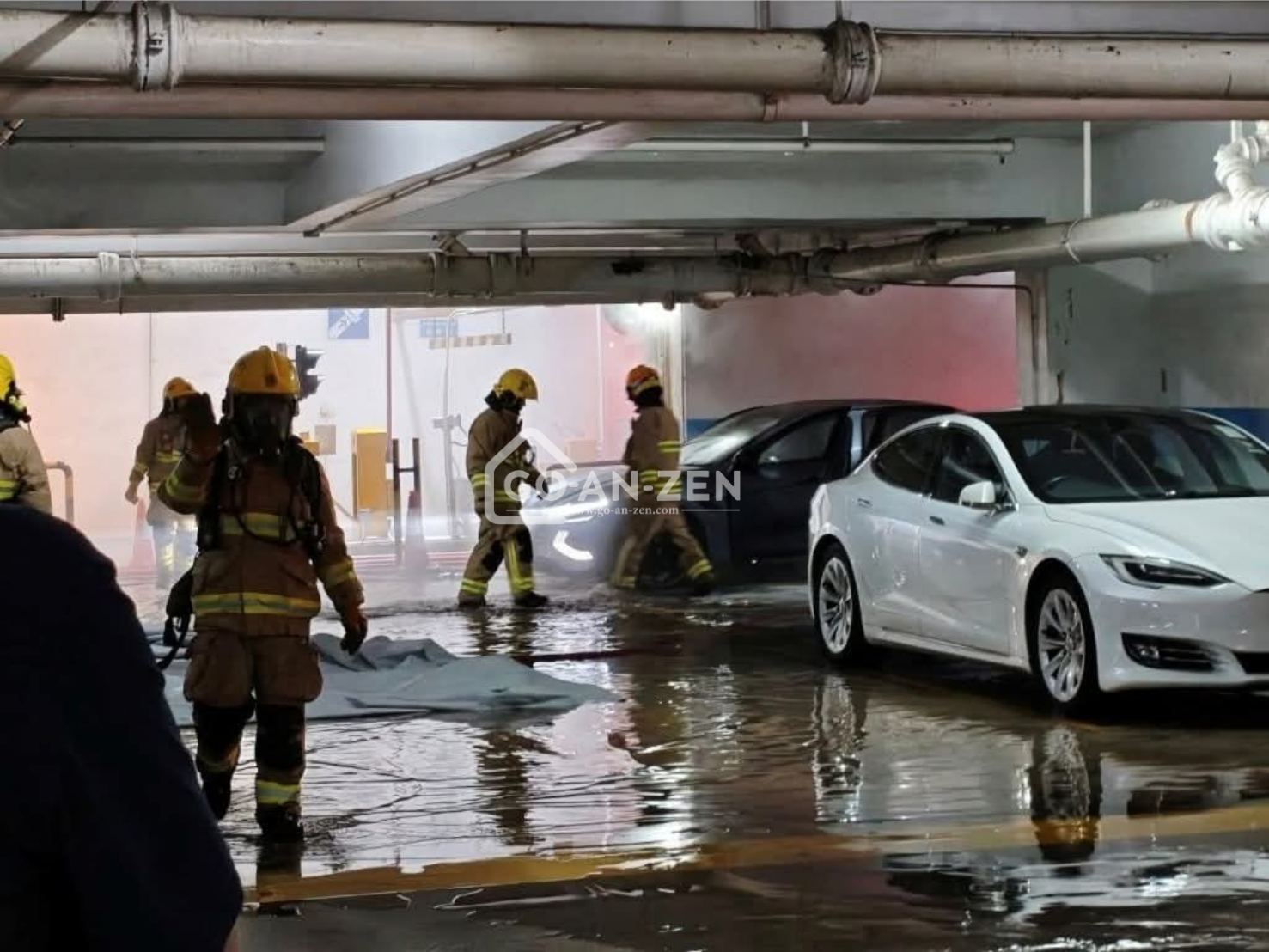
• Extreme heat and long burning times
Temperatures can exceed 1,000 °C, burning for hours rather than minutes; standard sprinklers are rarely enough to stop thermal runaway or prevent re‑ignition up to 72 hours later.
• Toxic, trapped gases
Smoke containing HF, CO and other harmful substances accumulates rapidly in low‑ventilation areas, endangering occupants, responders, and complicating evacuation.
• Structural threats
Intense heat may weaken concrete and steel supports; large volumes of contaminated water used for cooling can flood levels, damage systems, and create costly hazardous waste cleanup.
• Rapid spread risk
Radiant heat easily ignites nearby vehicles; traditional layouts often lack fire‑resistant zoning for EVs.
• Operational & legal exposure
Extended shutdowns, higher insurance costs, regulatory scrutiny, and liability concerns grow as EV adoption rises.
Preparedness is key — solutions like EV fire blankets help contain spread, limit oxygen intake, and buy critical time until responders arrive.